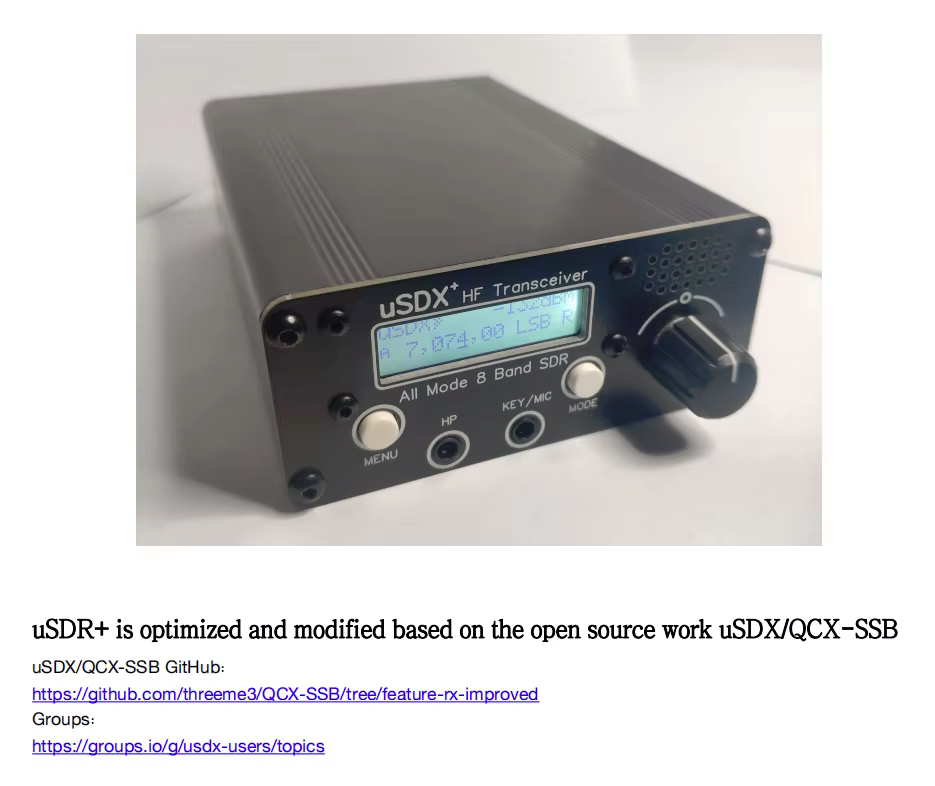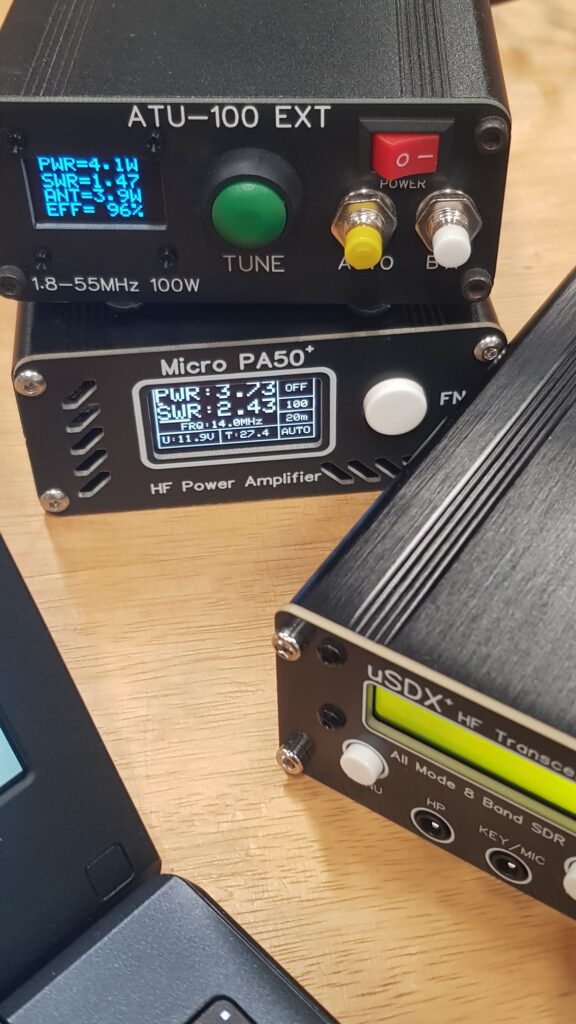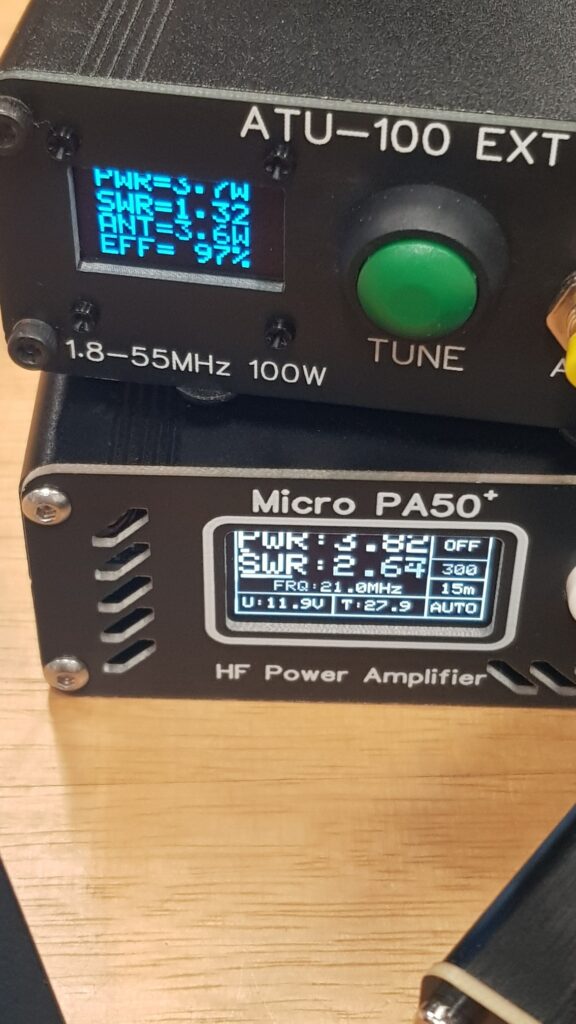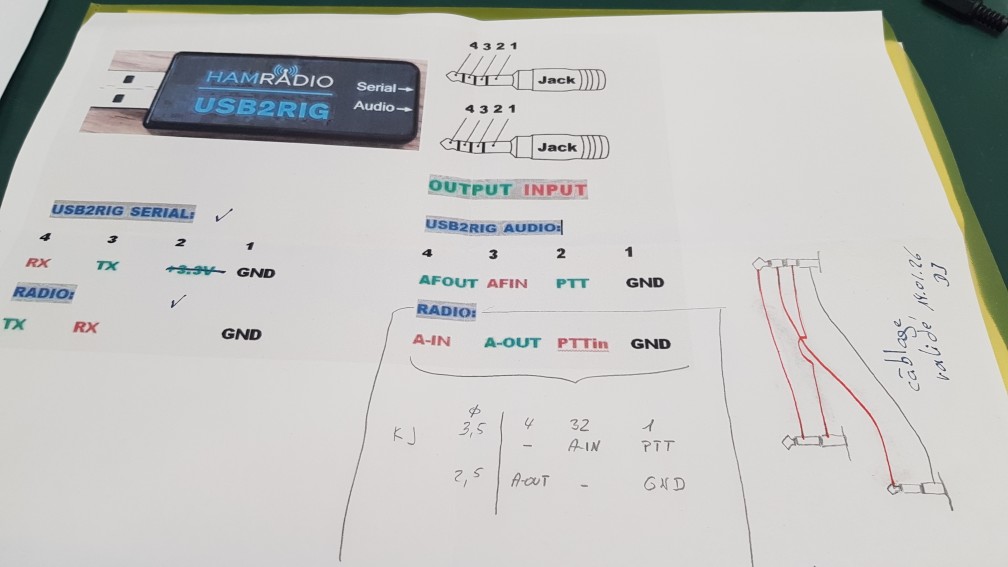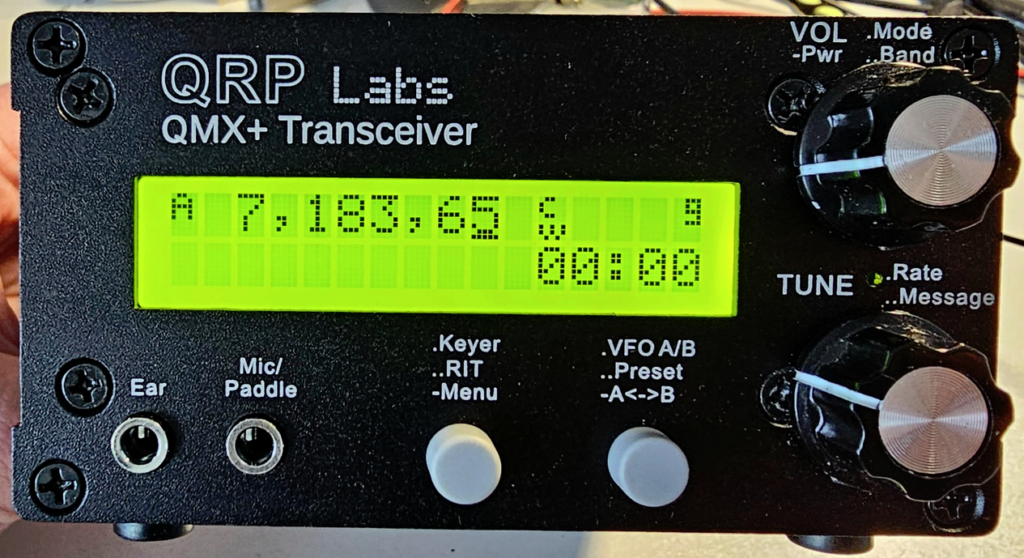
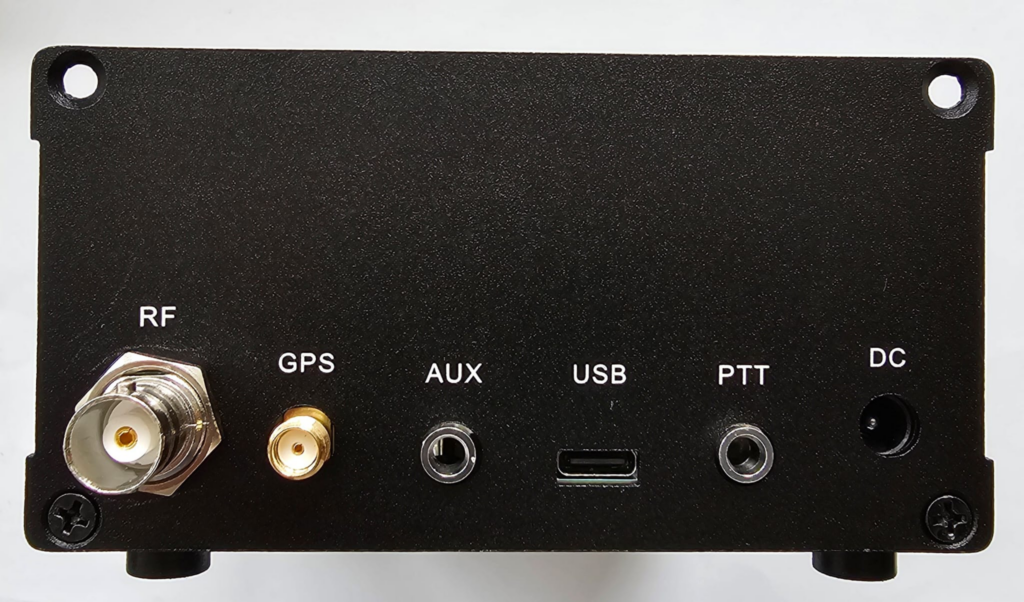
Matériel commandé à Friedriechhafen en 2025 pour 150 euro.
J’ai pris en plus le module GPS
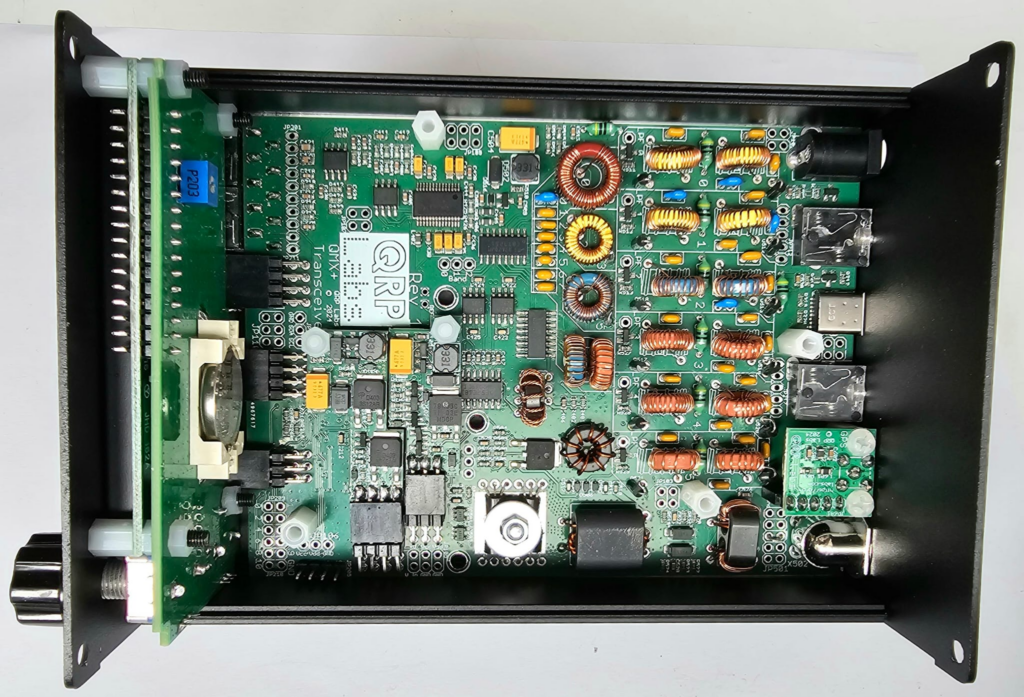
Fichier de montage
Si vous avez reçu comme moi : 1 x toroid T37-6 et 4x toroid T37-10; n’utilisez pas le toroid T37-6 pour fabriquer le transfo L 403 !
Mais gardé le pour la self L506 !
Ce fichier explique comment fabriquer le transformateur d’alimentation pour 12Vdc
RWTST
Concernant les brasures, pour son print à 6 couches sans frein thermique, j’ai réglé la température à 400 °C.
De fait, imaginer que l’on puisse dessouder une pin qui se trouve sur le GND, devient mission impossible (comme on est pas dans un film où Tom Cr… y arrive systématiquement) c’est vraiment IMPOSSIBLE !
Conséquence, pour changer un MOSFET bs170 de l’étage de sortie, on doit souder sur les anciennes pins du mosfet !
Autre surprise :
Si il y a une micro coupure sur l’alimentation d’entrée (+ 12Vdc), le QMX+ s’éteint et ne s’enclenche plus !
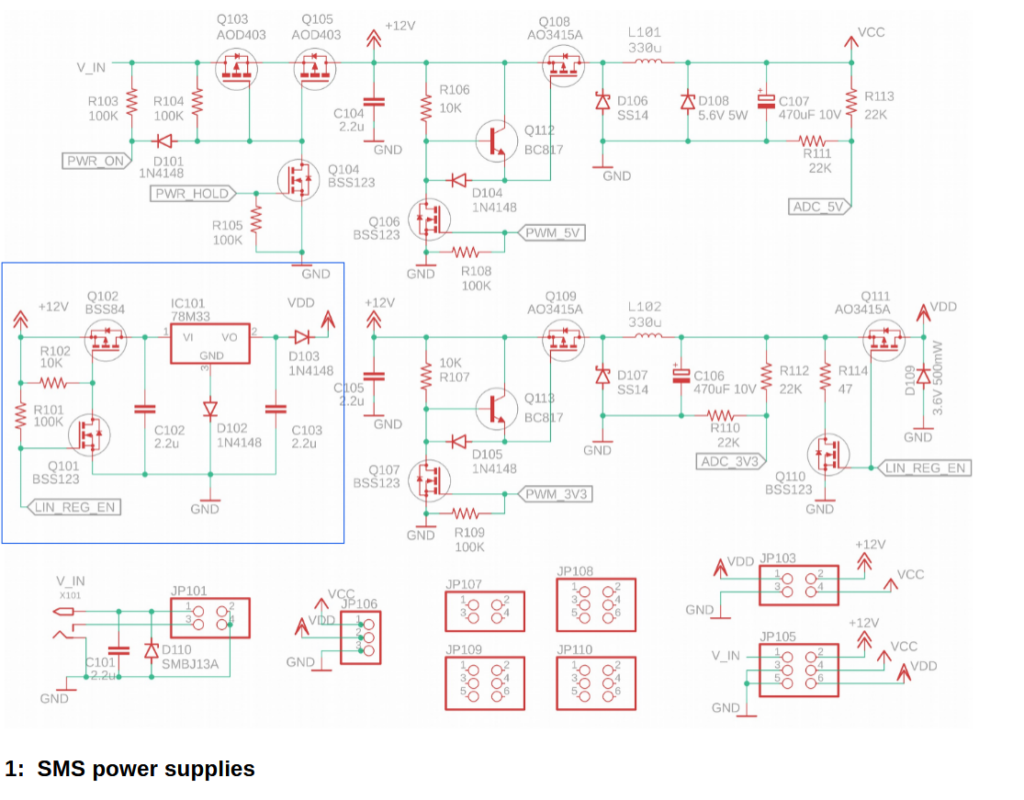
Le microcontrôleur STM32 F446 est alimenté de base par le dc-dc représenté dans le carré bleu (à l’insertion de la fiche DC alimentée par une batterie 12 Vdc).
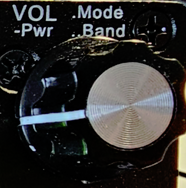
QMX+ attend que l’on appuie sur le bouton -Pwr (environ 1 seconde)
A ce moment QMX+ via la commande LIN_REG_EN stop la régulation (IC101) pour passez sur le régulateur (se trouvant à droite du schéma) et enclenche la radio.
Dans le cas d’une micro coupure sur l’entrée DC 12Vdc, la diode zéner se court – circuite et met l’alimentation VDD à la masse.
Le QMX+ ne peut plus s’enclencher !
Information depuis le site QRP_LAB:
Zener diode D109
Details Created: 29 July 2025 Last Updated: 29 July 2025 Hits: 9759
Why D109 must be a 3.6V 500mW zener diode – NOT a higher wattage!
The first batch of QMX boards (May 2023) used 500mW zener diodes for D109 (3.6V) and D108 (5.6V). These diodes are normally non-conducting but if anything goes wrong, they serve to short current to ground to protect downstream circuits from over-voltage. It was noticed that the 5.6V diode D108 was a little too prone to failure. At first glance it seemed to make sense to increase the wattage of the diodes to 5V and indeed this was done in the second batch. FAIL!
The problem is that low voltage zener diodes, below 5.5V or so, aren’t the same as higher voltage ones. Above 5.5V the mechanism responsible is « avalanche breakdown » and it’s quite sudden, by which I mean the current vs voltage curve gets suddenly very steep. So in the case of the 5.6V zener on the 5W SMPS board, whether you put in a 500mW diode or a 5W diode, the IV curve is practically idenrical, the only difference is that the diode will take a lot more abuse before it fails. Changing it from a 500mW to a 5W device was harmless.
Diodes below 5.5V rating use the actual real « zener breakdown » effect. It’s a much gentler shallower curve, unfortunately. When a diode is specified as « 3.6V zener », read the datasheet, this voltage is specified for a given current flow, a certain point on the curve. The specification current flow is very different for higher wattage devices than low wattage ones.
Dumb me, I didn’t know any of this, and so I happily ordered 3.6V 5W zener diodes thinking that it’s an easy substitution like using a 10V 470uF tantalum instead of a 6.3V one. Then found that even at the correct 3.3V operation voltage of the SMPS a substantial current flowed through the diode, making it very hot and raising the current consumption of the whole QMX by something like 30mA. It took me a while to figure out what was going on, and a lot of experiments, research and reading. 3.6V 500mW zener means the voltage is 3.6V at some much larger current flow (I forget exactly); and even at 3.3V there’s considerable current flow.
Below is one of my measurement plots from those days. Notice the 500mW and 5W 5.6V zener IV curves totally overlap over on the right hand side of the chart. So a 5W diode is a good substitute for a 500mW one. But the 3.6V curves are all over the place… Because « 3.6V » only has a specific meaning at a specified current; it’s a point on a very gently sloped IV curve.
Conclusion is that zener diodes with breakdown voltages under 5.5V are evil. Any possible hope I have of avoiding them for the rest of my life, I’ll take… Every effort to design out low voltage zeners from any projects!
So please don’t be tempted to change out the 3.6V 500mW zener for a higher watt rated one… It’s a good fuse, keep it that way 😉